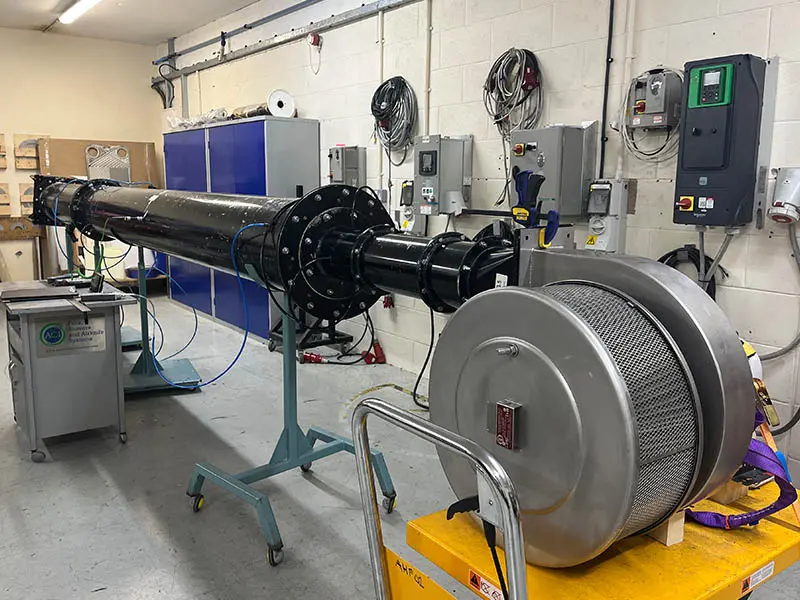
In Malaysia’s fast-paced industrial landscape, maintaining optimal air circulation is essential for operational efficiency, employee safety, and equipment longevity. Whether you’re managing a manufacturing plant in Penang or an electronics facility in Selangor, proper ventilation plays a crucial role in regulating temperature, removing contaminants, and ensuring comfort. But when it comes to selecting the right air movement equipment, many operators find themselves asking the same question — should I invest in an industrial fan or a blower?
To help you make an informed decision, this article outlines the key differences between industrial fans and blowers, their specific applications, and which is better suited to your Malaysian operation.
Understanding the Basics: What Sets Them Apart?
At first glance, fans and blowers might seem similar — both move air from one point to another. However, the way they operate and their intended use cases are quite different.
Industrial Fans
Industrial fans are designed to move large volumes of air at relatively low pressure. They are generally used for ventilation, cooling, and air circulation in open or semi-enclosed spaces.
- Airflow Direction: Fans move air axially (in a straight line).
- Pressure Ratio: Less than 1.1.
- Typical Uses: General ventilation, cooling workers or equipment, reducing heat in large spaces.
Industrial Blowers
Blowers, on the other hand, are engineered to move air or gas at higher pressures and are commonly used when resistance to airflow is significant, such as in ducts or confined systems.
- Airflow Direction: Can be axial or centrifugal (at an angle).
- Pressure Ratio: Between 1.1 and 1.2.
- Typical Uses: Pneumatic conveying, fume extraction, combustion air supply, and material handling.
Key Factors to Consider for Malaysian Operations
1. Industry Type
- Manufacturing Plants: If your operation involves processes like welding, chemical mixing, or high-temperature machinery, blowers may be more appropriate due to their ability to handle high-resistance airflow.
- Warehouses and Logistic Centres: These usually benefit more from large industrial fans that can maintain airflow and keep temperatures manageable.
- Food & Beverage: Hygiene and air purification are critical, making blowers ideal for processes requiring filtered or pressurised air. However, fans are often used in common areas to maintain comfort.
2. Climate and Environmental Conditions
Malaysia’s hot and humid climate means temperature and ventilation control are paramount. Industrial fans are commonly used to maintain airflow and prevent stagnant air pockets, especially in large-scale facilities. However, in enclosed areas with poor natural ventilation, a blower system with ducting may be more effective in removing heat and fumes.
3. Energy Efficiency and Operational Costs
Energy consumption is a major concern for Malaysian businesses, especially with increasing electricity tariffs. In general, fans consume less power compared to blowers due to their lower pressure output. If your operation does not require high-pressure air movement, opting for an energy-efficient fan system can lead to substantial long-term savings.
Blowers, although more power-intensive, can be cost-effective when their performance is aligned with specific needs — for example, in material transfer systems or fume exhaust systems where precision and pressure are necessary.
Performance Comparison Table
| Feature | Industrial Fan | Industrial Blower |
|---|---|---|
| Air Volume | High | Moderate to High |
| Air Pressure | Low | Medium |
| Energy Consumption | Lower | Higher |
| Maintenance Requirement | Low to Moderate | Moderate to High |
| Noise Level | Generally Low | Often Higher |
| Suitable Applications | Cooling, ventilation | Ducted systems, exhaust, drying |
Compliance with Malaysian Regulations
When installing either system, it’s vital to ensure compliance with the Department of Occupational Safety and Health (DOSH) Malaysia’s ventilation standards. Proper installation and regular maintenance of industrial fans and blowers contribute to safer workplace environments, reduce fire hazards, and help avoid penalties.
Making the Right Choice
When deciding between a fan and a blower for your Malaysian operation, consider the following questions:
- What is the size and layout of your facility?
- Do you need to move air over long distances or through ductwork?
- Are you trying to reduce heat, remove fumes, or both?
- What are your energy efficiency goals?
If your objective is to circulate air in a large, open facility with minimal resistance, an industrial fan is likely the better option. However, if your processes involve complex airflow paths, high resistance, or require pressurised air delivery, a blower will be more suitable.
Final Thoughts
Both industrial fans and blowers play vital roles in ensuring workplace efficiency, health, and safety across Malaysian industries. The right choice depends on your specific operational needs, the environment in which you work, and long-term goals for energy consumption and maintenance.
Consulting with a trusted local supplier of industrial ventilation solutions in Malaysia can help you identify the most suitable product for your application. By choosing wisely, you can enhance your facility’s performance, meet regulatory standards, and create a more productive working environment.
Need help choosing between a fan or blower for your facility? Partner with a reputable Malaysian supplier who understands the local climate and industrial standards to get the most efficient solution for your needs.