How Particle Size Analyzers Support Thailand’s Food, Cosmetics, and Chemical Industries
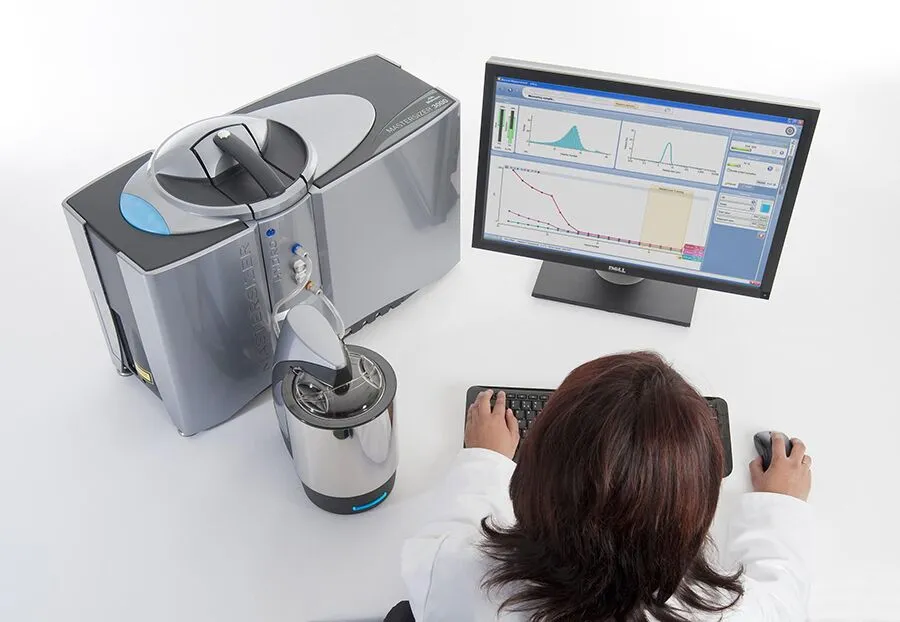
In the modern industrial landscape, stringent quality standards and consumer expectations demand precision at every stage of production. Among the many tools that enable manufacturers to consistently achieve high‑quality products, particle size analysers play a fundamental role. In Thailand — a regional hub for food processing, beauty products, and chemical manufacturing — these instruments are increasingly essential. They support product performance, regulatory compliance, cost efficiency, and innovation across sectors where particle characteristics significantly influence functionality and consumer perception.
Understanding Particle Size and Its Importance
Particle size refers to the dimensions of individual particles in a substance and often influences properties such as texture, solubility, stability, appearance, and reactivity. Whether dealing with powdered food ingredients, emulsions in skincare formulations, or fine chemicals, knowing the distribution of particle sizes helps manufacturers fine‑tune their processes.
Particle size analysers measure these distributions using technologies such as laser diffraction, dynamic light scattering (DLS), sieve analysis, or microscopy. Each method offers unique advantages depending on the material’s nature and the required precision. Accurate particle analysis enables manufacturers to control product quality and meet exacting specifications.
Boosting Thailand’s Food Industry
Thailand’s food sector is one of the country’s economic pillars, known globally for exports of rice, seafood, seasonings, snacks, and ready‑to‑eat products. In this highly competitive market, consistent product quality is paramount.
Texture and Mouthfeel
In foods like powdered beverages, flour blends, or instant soups, particle size impacts dissolution speed, mouthfeel, and texture. A coarser particle might dissolve slower, affecting the consumer experience, while an overly fine powder could lead to caking or poor flow properties during manufacturing and packaging.
By integrating particle size analysers into production lines, food processors can:
- Ensure uniform mixing and dispersion
- Prevent issues like aggregation or inconsistent reconstitution
- Optimise milling and drying processes to match target particle profiles
For example, instant drink powders are engineered with specific particle sizes to ensure rapid dissolution in cold water — a critical quality parameter that particle size analysis can verify.
Food Safety and Shelf Life
Particle size can also influence microbial stability and shelf life. Smaller particles expose more surface area, potentially accelerating oxidation or moisture uptake. Through regular monitoring, manufacturers can adjust process conditions to extend shelf life and maintain safety standards.
Enhancing Thailand’s Cosmetics Industry
Thailand’s cosmetics and personal care market has experienced booming growth, driven by both domestic demand and global exports. With beauty consumers seeking flawless textures and consistent performance, particle size analysis has become indispensable.
Emulsion Stability and Skin Feel
Many cosmetic products — such as creams, lotions, foundations, and serums — are emulsions containing dispersed oil and water phases. The size of droplets in these emulsions directly affects product stability, feel, and appearance.
Particle size analysers help cosmetics labs to:
- Achieve stable emulsions with smooth textures
- Identify unwanted aggregation that leads to separation or grainy feel
- Optimise formulation for a specific skin sensation (e.g. silkiness versus lightness)
For instance, foundation makeup is expected to apply smoothly and evenly. If pigment particles are too large, the finish can appear uneven or cakey. Accurate particle sizing ensures that formulations deliver the desired finish and performance.
Safety and Regulatory Compliance
Cosmetics often contain active ingredients like UV filters, antioxidants, or moisturisers. The bioavailability and effectiveness of these actives may depend on particle characteristics. Regulators increasingly require detailed characterisation of ingredients to ensure safety and efficacy. Particle size analysers offer quantifiable data to support regulatory submissions and product labelling.
Driving Precision in Thailand’s Chemical Industry
Thailand’s chemical industry supplies raw materials for plastics, pharmaceuticals, rubber, adhesives, coatings, and more. In chemical processes, particle size influences reactivity, solubility, dispersion, and process efficiency.
Catalysts and Reactivity
In catalysis — a staple of chemical manufacturing — smaller particles usually provide a higher surface area, enhancing reaction rates. Controlling and measuring particle size ensures that catalysts perform consistently, which can directly impact yield and production costs.
Coatings, Paints, and Polymers
In paints and coatings, uniform pigment size distribution is critical for colour consistency, gloss, and coverage. Likewise, polymers and resins often require specific particle characteristics to ensure proper melting, curing, or mechanical properties.
Particle size analysis enables chemical manufacturers to:
- Standardise batches for consistent performance
- Troubleshoot issues such as sedimentation or poor dispersion
- Optimise milling and grinding processes
By doing so, they reduce waste, increase process efficiency, and deliver materials meeting both industrial and consumer standards.
Economic and Competitive Advantages
Across all three industries — food, cosmetics, and chemicals — particle size analysis offers economic benefits:
- Reduced waste: More precise processing decreases off‑spec production.
- Faster R&D cycles: Reliable data accelerates formulation and process optimisation.
- Higher export potential: Compliance with international quality standards enhances competitiveness in global markets.
- Cost savings: Efficient use of raw materials and reduced recall risks improve profitability.
Moreover, as Thailand continues to attract foreign investment in high‑tech manufacturing, particle size analysis supports the country’s transition to higher value‑added production.
Conclusion
Particle size analysers are quiet yet powerful enablers of quality and innovation in Thailand’s food, cosmetics, and chemical industries. By providing precise, actionable data on particle distributions, these instruments ensure that products perform as intended, meet regulatory requirements, and satisfy consumer expectations. As industries evolve and quality demands rise, particle size analysis will remain an essential part of Thailand’s manufacturing landscape, fostering growth and strengthening the nation’s global industrial footprint.