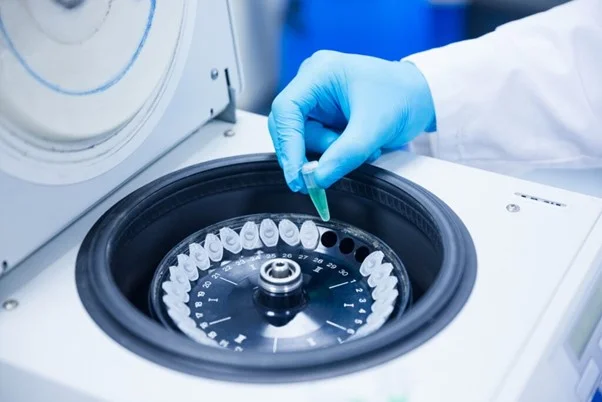
In Thailand’s rapidly advancing scientific landscape, laboratory centrifuges have become indispensable instruments across various sectors, including healthcare, research, and industrial applications. These devices utilize centrifugal force to separate components of a mixture based on their densities, playing a crucial role in diagnostics, molecular biology, and chemical analysis. The evolution of centrifuge technology in Thailand reflects a commitment to enhancing accuracy, efficiency, and safety in laboratory operations.
The Role of Laboratory Centrifuges
Centrifuges are essential for processes such as blood separation, DNA extraction, and protein purification. They operate by spinning samples at high speeds, causing denser components to move outward, thereby facilitating separation. This capability is vital in clinical diagnostics, where precise separation of blood components is necessary for accurate test results. Similarly, in molecular biology, centrifuges aid in isolating nucleic acids and proteins, which are fundamental for genetic research and biotechnology applications.
Advancements in Centrifuge Technology in Thailand
Thailand has seen significant advancements in centrifuge technology, with local and international manufacturers offering a range of models tailored to diverse laboratory needs. Companies like Tri Solution provide various centrifuge models, including compact, mini, micro, and refrigerated types, catering to different laboratory scales and requirements. These innovations aim to improve sample processing efficiency and ensure reproducible results.
Furthermore, the integration of features such as automated balancing, noise reduction, and improved rotor designs has enhanced the performance and user-friendliness of modern centrifuges. These developments contribute to the growing accessibility of high-performance centrifuges in smaller laboratories and research facilities.
Ensuring Accuracy and Efficiency
The accuracy and efficiency of centrifuges are paramount in obtaining reliable laboratory results. Regular calibration and maintenance are essential practices to uphold these standards. Eppendorf Thailand offers calibration services for centrifuges, ensuring that parameters such as time, speed, and temperature are within specified tolerances. This service helps maintain the precision of experimental data and extends the lifespan of the equipment.
Additionally, advancements in centrifuge design, such as the development of high-speed compact models with programmable settings, have improved operational efficiency. For instance, the AS ONE MF-12000 model offers a rotation speed range of 1,000 to 12,000 rpm and a timer function, allowing for precise control over the centrifugation process.
Safety Considerations
Safety is a critical aspect of centrifuge operation. Improper use can lead to equipment damage or personal injury. Guidelines for safe centrifuge operation include ensuring proper installation, balancing loads accurately, and adhering to maintenance schedules. For example, Esco Lifesciences emphasizes the importance of correct installation and maintenance to maximize centrifuge performance and safety.
Moreover, innovations such as rotor imbalance detection systems and aerosol-tight rotor lids have been implemented to enhance safety. These features help prevent accidents and maintain a safe working environment in laboratories.
The Future of Centrifuge Technology in Thailand
Looking ahead, the future of centrifuge technology in Thailand is promising, with ongoing research and development aimed at further enhancing performance and accessibility. The introduction of portable imaging spectrophotometers, such as the Lab-in-a-Tube device, offers real-time analysis of centrifugation processes, potentially revolutionizing sample monitoring in laboratories.
Additionally, the trend towards sustainable practices is influencing centrifuge design, with manufacturers focusing on energy efficiency and reduced environmental impact. For instance, Zhongke Meiling’s innovative design significantly reduces refrigerant loss in refrigerated centrifuges, ensuring optimal performance and energy efficiency.
Conclusion
Laboratory centrifuges are pivotal in ensuring the accuracy and efficiency of laboratory operations in Thailand. Through continuous advancements in technology, adherence to safety protocols, and commitment to sustainability, Thailand’s laboratory sector is poised to meet the evolving demands of scientific research and clinical diagnostics. As the landscape of laboratory technology continues to evolve, the role of centrifuges remains integral to the pursuit of scientific excellence.